Dementia Care
A Warm, Person-Centred Approach
We know that dementia isn’t just a condition—it’s a deeply personal journey that affects everyone differently.
That’s why, at our care home, we focus on the person first. Their story, their personality, their preferences—what makes them them. Our aim is simple: to help every resident feel safe, valued, and truly at home.
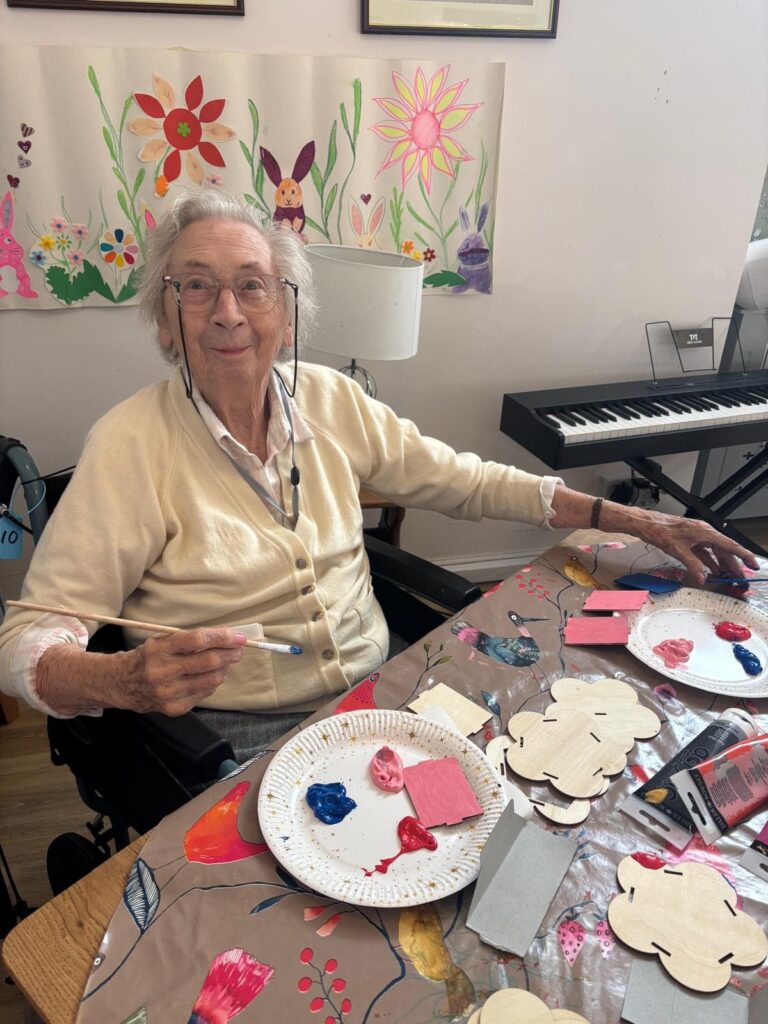
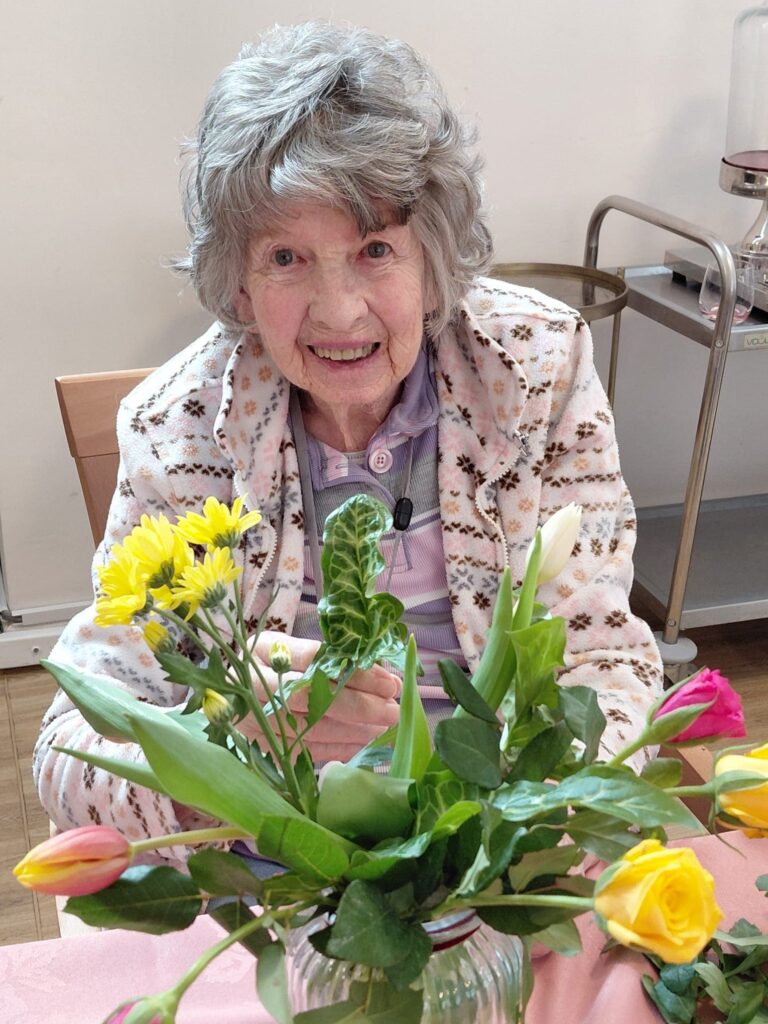
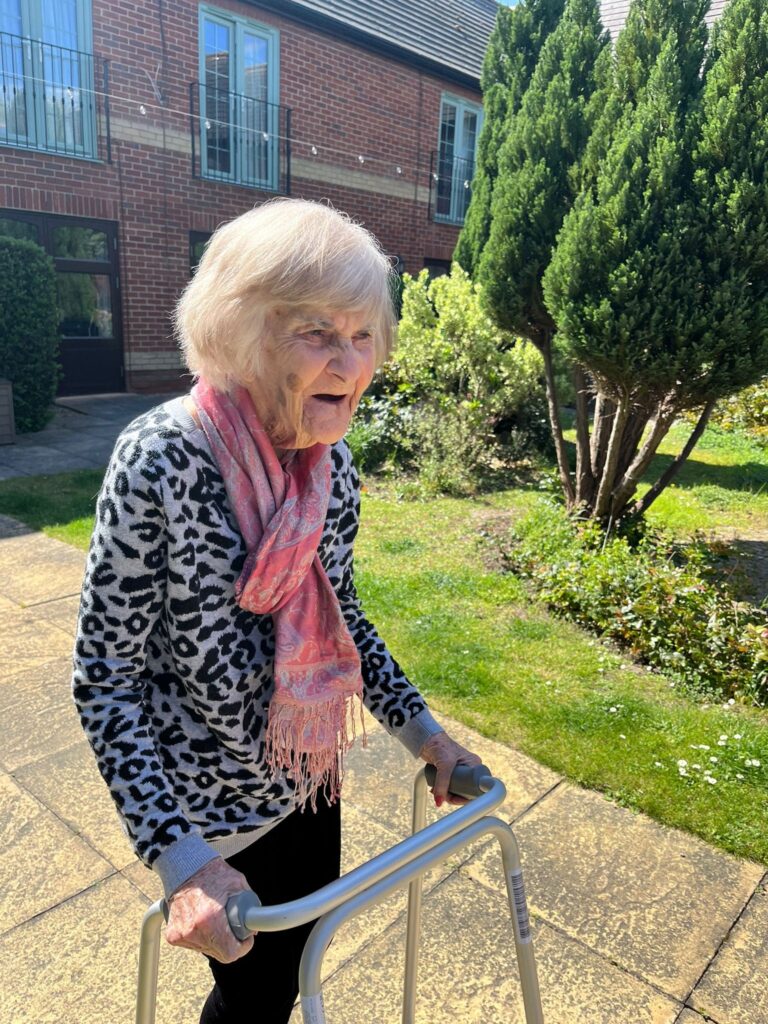
Understanding Dementia
- Dementia affects millions of people and families around the world.
- It’s not a single illness, but a term used to describe changes in memory, thinking, and everyday abilities.
- The most common type is Alzheimer’s disease, alongside others such as Vascular dementia and Lewy body dementia.
- It’s more common as we get older, but it’s not a normal part of ageing.
- Everyone’s experience is different, which is why personalised care matters so much.
A Growing Global Challenge
- Dementia is one of the biggest health challenges of our time, with over 55 million people living with it worldwide.
- Every 3 seconds, someone receives a diagnosis.
- As people live longer, more families are affected—making compassionate, high-quality care more important than ever.
How We Care
We take a whole-person approach—looking after not just physical health, but emotional wellbeing and social connection too.
- We follow the biopsychosocial approach, meaning we care for:
- The body
- The mind
- And the importance of relationships and connection
- We also follow guidance from National Institute for Health and Care Excellence (NICE), which means we always aim for the highest standard of care and avoid unnecessary medication wherever possible.
- Our philosophy is inspired by Thomas Kitwood, who believed that people with dementia should always be treated with dignity, respect, and compassion.
The Ways We Support Our Residents
We use a range of thoughtful, proven approaches to make sure every resident feels understood and supported:
- Dementia Care Mapping
- Thomas Kitwood’s Enriched Model
- The Flower of Social Needs
- Talking Mats
- “Go with the Flow: Beyond the Script”
- Life Story Integration
- Person-Centred Creative Care
- Support with Activities of Daily Living (ADL)
- Evidence-based therapies
- “Seeing Through Their Eyes”
These aren’t just methods—they help us truly understand each person and tailor care in a way that feels natural and comforting.
Communicating with Care
Sometimes, words become harder—but connection doesn’t.
Our team is specially trained to communicate in ways that reduce anxiety and build trust:
- Decoding the silent message
Understanding what someone might be feeling through their behaviour
- Reality pivoting
Gently stepping into their world, rather than correcting or contradicting
- Noun anchors
Using familiar words to help conversations feel easier and more reassuring
What This Means for Our Residents
Everything we do is designed to help residents feel like themselves for as long as possible:
- Holding onto identity
We celebrate each person’s life, history, and personality
- Staying connected
Creating real moments of joy, conversation, and togetherness
- Respect and dignity
Treating every resident as the adult they are
- Supporting independence
Encouraging familiar routines and everyday skills
Supporting Families & Loved Ones
We know dementia doesn’t just affect one person—it affects the whole family.
That’s why we’ve created a short, 30-minute course called “Seeing Through Their Eyes”, designed especially for families and loved ones.
It offers:
- Simple, practical advice
- A better understanding of dementia
- Helpful ways to communicate and connect
Sometimes, just a little guidance can make a big difference.
Living Well with Dementia
- Life doesn’t stop with a dementia diagnosis.
- With the right care and support, there can still be joy, laughter, and meaningful moments every day.
- Whether it’s music, conversation, familiar routines, or quiet companionship—we focus on what matters most to each individual.
- Our home is designed to feel calm, safe, and reassuring.
Frequently Asked Question
“If they don’t remember my name, do they still know who I am?”
- Yes—just in a different way.
- Remembering names (factual memory) is different from remembering feelings (emotional memory).
- Even if your loved one can’t recall your name, they still feel the warmth, comfort, and safety you bring.
- That connection doesn’t disappear—it just changes.
Our Promise
We care deeply about what we do.
Every smile, every conversation, every small moment matters. By combining professional expertise with genuine kindness, we create a place where people feel safe, respected, and truly cared for.
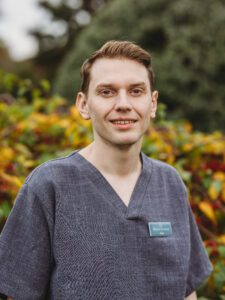
Alan Boulter – Our amazing Dementia Co-Ordinator
About Alan:
“My journey into dementia care began in an unconventional place: the Bristol Old Vic Theatre School, where I originally trained as a Stage Manager. Following my training, I spent 20 years working as a Stage Manager and Creative Producer in the West End and on tour across the UK and Europe. While I loved the vibrancy of the arts, I found myself drawn to a more rewarding path in social health care. Starting my career on the front lines as a Health Care Assistant, I saw firsthand the profound need for a more creative, person-centred approach to supporting those with cognitive change.
Today, I am proud to hold the newly created role of Dementia Coordinator here at The Old Vicarage. My approach is a blend of high-level clinical training and creative innovation. I have completed Dementia Care Mapping training at the University of Bradford, Dementia Champion training at the University of Worcester, and Talking Mats training at the University of Stirling. I am also trained in MoCA (Montreal Cognitive Assessment) and have completed various specialist courses with the University of Derby, Dementia Training Australia, and the Wicking Dementia Research and Education Centre. Currently, I am further deepening my expertise by studying for a Master’s in Ageing and Dementia at Brighton and Sussex Medical School.
By combining two decades of experience in the arts with this extensive specialist training, I developed our award-winning ‘Go with the Flow – Beyond the Script’ program. This allows us to use applied improvisation and the biopsychosocial framework to ensure our residents don’t just live, but thrive. My mission is to ensure that every individual at The Old Vicarage experiences the best possible quality of life, anchored in dignity, identity, and genuine connection.”